Better Sleep Habits for a More Restful Night
I’m so tired of seeing those aesthetic, “perfect life” influencers claim you need a $2,000 smart mattress and a complete sensory deprivation chamber to actually rest. Honestly, it’s exhausting. Most of the advice you find when searching for sleep hygiene tips feels like it was written for someone who has zero job, zero stress, and an unlimited budget for linen sprays. I spent months thinking I needed a total lifestyle overhaul just to stop staring at my ceiling at 3:00 AM, but the truth is much more uncomplicated than that.
I’m not here to sell you a luxury wellness routine or tell you to meditate for two hours before bed. Instead, I want to share the small, low-effort tweaks that actually helped me stop feeling like a zombie during my freelance calls. We’re going to focus on a few realistic, no-nonsense adjustments that fit into a messy, real-world schedule. My goal isn’t to help you achieve “perfect” sleep, but to help you find a better way to handle your Tuesday morning without needing three extra shots of espresso.
Small Shifts for Improving Sleep Quality Naturally
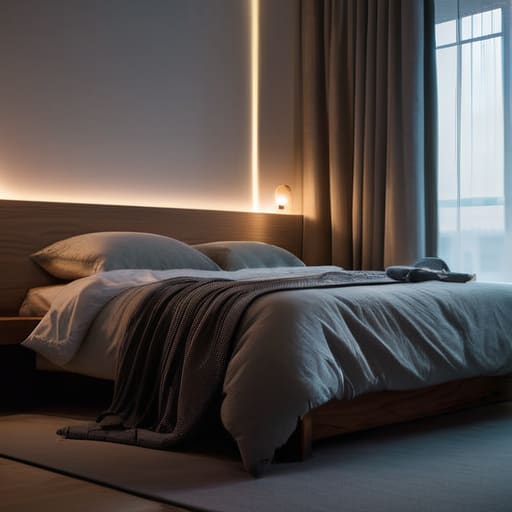
I’m not a big fan of the idea that you need to buy a $2,000 smart mattress to actually feel rested. For me, it’s much more about the small, tactile changes you can make to your space. I started by optimizing my sleep environment in a very low-tech way: keeping the room slightly cooler and getting rid of any stray light leaks from my electronics. It’s funny how much a single LED light from a power strip can mess with your head when you’re trying to wind down.
Another thing that shifted the needle for me was being more intentional about blue light exposure and sleep. I used to scroll through my phone until the second my eyes closed, which is basically a recipe for a restless night. Now, I try to swap the screen for my physical notebook about thirty minutes before bed. It helps signal to my brain that the workday is officially over. This kind of simple circadian rhythm regulation doesn’t require a massive lifestyle overhaul; it just requires a little bit of discipline during that final hour of the day. It’s about making the transition from “on” to “off” feel a little more seamless.
The Real Cost of Ignoring Sleep Deprivation Consequences

I used to think I could outrun a lack of sleep with an extra espresso shot and sheer willpower. I was wrong. When I was juggling freelance gigs and a chaotic social life, I treated sleep like an optional luxury rather than a requirement. But the sleep deprivation consequences hit me hard, and it wasn’t just about feeling groggy. It was the brain fog that made a simple email feel like a mountain, the sudden irritability with my friends, and that weird, jittery anxiety that seems to settle in when your body is running on empty.
It’s a slippery slope. When you ignore your body’s need for rest, you aren’t just losing hours of productivity; you’re actually eroding your ability to function at a baseline level. I noticed that my focus would crater by 2:00 PM, and my mood would follow suit. It becomes a cycle where you’re too tired to be efficient, so you work late to catch up, which then messes with your circadian rhythm regulation even further. It’s not about being a “hustler” if you’re too burnt out to actually enjoy the work you’re doing. You have to realize that sleep isn’t time lost—it’s the foundation for everything else.
My Low-Stakes Guide to Actually Getting Some Rest
- Stop treating your phone like a bedtime story. I know, it’s hard, but that blue light is basically a shot of espresso for your brain. Try putting your phone on the other side of the room—or better yet, in a different room entirely—at least thirty minutes before you want to pass out.
- Find a “buffer zone” that doesn’t involve a screen. Instead of scrolling through TikTok until your eyes burn, try something low-fi. I’ve been leaning into reading a physical book or even just doodling in my notebook. It signals to your brain that the workday is officially over.
- Watch the caffeine cutoff. I used to think that 4:00 PM coffee was fine because I could still fall asleep, but the quality was trash. Aim to have your last cup by early afternoon so your nervous system actually has a chance to settle down by 10:00 PM.
- Don’t make your bedroom a second office. If you work remotely like I do, the temptation to answer emails from bed is real. Keep your workspace and your sleep space separate. If your brain associates your bed with “stressful spreadsheets,” you’re never going to drift off easily.
- Embrace a “lazy” routine. You don’t need a ten-step meditation ritual. Just pick two small, repeatable things—like dimming the lights and splashing some cool water on your face—and do them every night. Consistency beats intensity every single time.
The TL;DR on Getting Better Rest
Forget the “perfect” routine; just pick one small thing, like ditching your phone 20 minutes before bed, and see if it actually helps.
Sleep isn’t a luxury or a productivity hack—it’s the baseline that keeps you from crashing mid-Tuesday.
Consistency beats intensity every single time; a steady, mediocre sleep schedule is way better than one perfect night followed by a week of chaos.
Getting Back to Real Life
Look, I know we just went through a lot of ground, from tweaking your evening routine to acknowledging how much a bad night can actually mess with your brain. The takeaway isn’t that you need to buy a thousand-dollar smart mattress or start meditating for an hour every night. It’s really just about those tiny, manageable adjustments—like dimming the lights or putting the phone in another room—that prevent your brain from spinning out of control. If you can manage to implement even one of these shifts this week, you’re already doing better than you were yesterday. It’s about making sleep work for you, not making sleep another stressful item on your to-do list.
At the end of the day, don’t let the pursuit of “perfect” sleep become just another thing that keeps you awake. Life is messy, schedules are chaotic, and some nights are just going to be rough no matter what you do. But if you focus on the small, repetitive habits, you’ll eventually build a foundation that holds up when things get hectic. You don’t need to master your entire biology by tomorrow morning; you just need to handle this Tuesday a little bit better. Take it one night at a time, keep it simple, and be kind to yourself while you figure it out.