How to Manage Your Tasks Without Constant Overtime

I was sitting at my desk last Thursday, surrounded by three half-empty coffee mugs and the aggressive click-clack of my mechanical keyboard, staring at a calendar that looked more like a battlefield than a schedule. I had spent the last hour downloading yet another “productivity powerhouse” app, convinced that a $10 subscription was the missing piece to my crumbling workflow. It’s a lie, isn’t it? We’ve been sold this idea that mastering time management at work requires complex systems, expensive software, or a complete personality transplant. But honestly, most of those “optimized” frameworks are just more noise added to an already loud day.
I’m not here to sell you on a life-altering ritual or a complicated color-coded system that takes more time to maintain than the actual work itself. Instead, I want to share the scrappy, realistic methods I’ve used to keep my freelance projects from spiraling into chaos. We’re going to skip the fluff and focus on small, repeatable tweaks that actually help you reclaim your afternoon. Let’s figure out how to handle the mess, one Tuesday at a time.
The Eisenhower Matrix for Productivity Without the Burnout
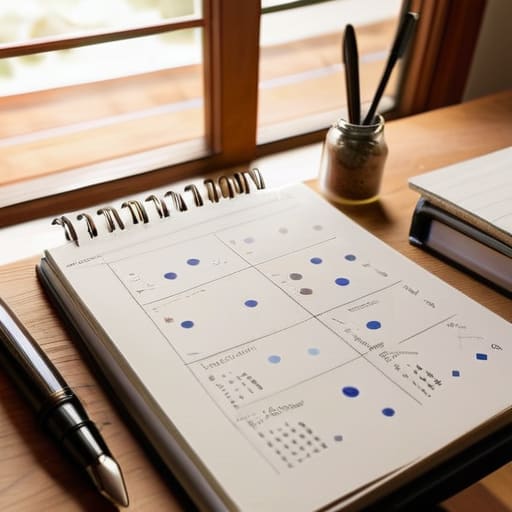
I used to think being “busy” was a badge of honor, but mostly I was just running in circles. I’d spend three hours answering non-urgent Slacks while my actual project deadlines loomed like dark clouds. That’s where the Eisenhower Matrix for productivity saved my sanity. It’s not some complex corporate framework; it’s basically just a way to stop treating every notification like a five-alarm fire. You take your tasks and split them into four buckets: urgent and important, important but not urgent, urgent but not important, and the “why am I even doing this?” category.
The real magic happens when you stop living in the “urgent” zone. Most of us burn out because we’re constantly reacting to things that feel pressing but don’t actually move the needle. By using this matrix, I’ve been able to focus on effective daily scheduling that prioritizes deep work over quick fixes. Instead of jumping at every ping, I categorize my tasks first. This helps me identify what I can actually delegate or, more importantly, what I can just stop doing entirely. It’s about reclaiming your brainpower so you aren’t just surviving your shift, but actually making progress.
Effective Daily Scheduling for People With Real Lives

Here’s the thing about most calendars: they’re built for robots, not for people who occasionally get distracted by a stray thought or a sudden urge to clean their desk. We’ve all been there, staring at a color-coded masterpiece only to realize we haven’t actually accomplished anything by 3:00 PM. Instead of trying to account for every single minute, I’ve started leaning into time blocking techniques that actually leave room for breathing. I don’t block out “Work”; I block out “Deep Focus: Client Report” or “Admin: Inbox Zero.” It’s about giving your brain a specific job rather than a vague suggestion.
The secret to making this stick isn’t about being more disciplined; it’s about being more realistic. If you try to schedule your day with zero margin for error, you’re going to fail the moment a meeting runs long or your coffee spills. I like to build in “buffer blocks”—small, unassigned windows of time—to handle the chaos that inevitably crops up. This is a core part of effective daily scheduling because it prevents that domino effect where one small delay ruins your entire afternoon. By planning for the mess, you actually end up staying on track.
Five Small Ways to Stop the Clock from Running You
- Stop the “Just One More Email” Loop. We’ve all been there—it’s 4:55 PM, you feel like you’ve been productive, but you’re actually just spinning your wheels on low-stakes tasks. Set a hard “shutdown” time. When the clock hits that mark, close the tabs, grab your notebook, and walk away. It forces you to be more intentional with your actual working hours because you know the window is closing.
- Use the “Two-Minute Rule” for the Small Stuff. If a task pops up—like responding to a quick Slack message or filing a digital receipt—and it takes less than two minutes, just do it immediately. Don’t add it to a list, don’t “circle back” to it later. Clearing these micro-tasks prevents that overwhelming feeling of a mounting to-do list that isn’t actually that heavy.
- Batch Your “Deep Work” and “Shallow Work.” My brain isn’t built to switch gears every five minutes. I try to group all my administrative, “easy” tasks together in one block, and save my heavy lifting—the stuff that actually requires focus—for when I’m most awake. Constant context-switching is the fastest way to feel exhausted without actually getting anything done.
- Protect Your Focus with “Digital Boundaries.” I know, I’m a digital native, but constant notifications are the enemy of flow. When I’m in the middle of a project, I put my phone in another room or use a “Do Not Disturb” mode. If it’s not an actual emergency, it can wait twenty minutes while I finish what I’m doing.
- Build in “Buffer Zones.” Most of our schedules fail because we plan them like machines. We assume every meeting will end exactly on time and every task will go perfectly. Real life is messy. Always leave 15 minutes of “nothing” between major blocks. It gives you space to breathe, grab a coffee, or deal with the inevitable “quick question” from a coworker without derailing your entire afternoon.
The TL;DR on Staying Sane
Stop treating your to-do list like a life sentence; use the Eisenhower Matrix to ruthlessly cut the noise so you can focus on what actually moves the needle.
Ditch the rigid, hour-by-hour schedules that fall apart the second a meeting runs late—build a flexible daily flow that accounts for the chaos of real life.
Remember that productivity isn’t about doing more things; it’s about doing the right things well enough that you can actually close your laptop and breathe at the end of the day.
The Tuesday Reality Check

At the end of the day, time management isn’t about turning yourself into a productivity-obsessed robot or color-coding every single minute of your existence. We’ve looked at how the Eisenhower Matrix can help you stop drowning in busywork and how a realistic daily schedule keeps you from feeling like you’re constantly playing catch-up. The goal isn’t to squeeze every drop of efficiency out of your soul; it’s about using these tools to protect your energy so you don’t finish the workday feeling completely hollow. It’s about choosing what actually matters and letting the rest slide when the chaos inevitably hits.
If you feel like you failed at your schedule today, don’t sweat it. I’ve spent plenty of afternoons staring at a half-finished to-do list, wondering where the time went. The secret is realizing that productivity isn’t a straight line upward; it’s a series of small, messy adjustments. You don’t need to master your entire career by Friday. You just need to find a way to handle your Tuesday a little bit better than you did yesterday. Take a breath, grab your notebook, and just start with one small thing. You’ve got this.