Using Mind Mapping to Better Organize Your Ideas

I was sitting at my desk last Tuesday, surrounded by three half-empty coffee mugs and a digital calendar that looked more like a game of Tetris gone wrong, when I realized my brain had officially hit a wall. I had this massive project due, but instead of working, I was just staring at a blinking cursor, feeling that specific kind of paralysis that comes when you have too many ideas and zero structure. I’d seen those glossy productivity influencers claim that mind mapping requires expensive software or a degree in visual design to actually work, but honestly? That’s just more noise. Most of the time, when your head feels like a cluttered junk drawer, you don’t need a high-tech solution; you just need a way to get the chaos out of your skull and onto something tangible.
I’m not here to sell you on a complex new system or a subscription to some fancy app. I just want to show you how I use a simple pen and a scrap of paper to untangle my thoughts so I can actually get things done. We’re going to strip away the fluff and focus on the practical, low-fi ways to use mind mapping to tackle your most overwhelming tasks. No life overhauls, no complicated diagrams—just a few honest, repeatable steps to help you find your footing when things get messy.
Mastering Visual Thinking Techniques When Life Gets Loud

When my inbox is overflowing and my Slack notifications are hitting like rapid-fire percussion, my brain usually defaults to a state of “analysis paralysis.” I can’t think straight because I’m trying to process everything in a straight line, but life rarely works that way. This is where visual thinking techniques actually save my sanity. Instead of forcing myself to write a rigid, intimidating to-do list that I’ll just end up ignoring, I grab my notebook and start drawing. It’s about moving away from the pressure of perfect sentences and moving toward something more fluid.
I like to use non-linear note taking to mimic how my thoughts actually jump around. I’ll put the main stressor in the center of the page and let the sub-tasks branch out like veins. It’s not about making a piece of art; it’s about unloading the mental clutter so I can see the connections between what’s urgent and what’s just loud. Once I see the chaos mapped out spatially, it stops feeling like a mountain and starts feeling like a series of small, manageable steps. It turns a massive, overwhelming mess into a roadmap I can actually follow.
The Real Cognitive Mapping Benefits for Your Daily Grind

Look, I’m not here to give you a lecture on neurobiology. But I will say this: when I’m staring at a project brief that feels like a giant, tangled knot of deadlines and client requests, my brain usually just shuts down. That’s where the real cognitive mapping benefits kick in. Instead of forcing my thoughts into a rigid, boring list that feels like a chore to write, I use these visual layouts to let my ideas breathe. It’s about moving away from that suffocating, linear structure and embracing a bit of non-linear note taking. It lets you see the connections between a random task and a long-term goal that you would totally miss if you were just typing out bullet points.
It’s also become one of my favorite creative problem solving tools when I’m stuck in a rut. Sometimes, a problem isn’t actually hard; it’s just too big to see clearly. By sketching out how one piece of the puzzle affects another, the solution usually just… appears. It turns that overwhelming “everything is due at once” feeling into something manageable. It’s not about being a genius; it’s just about organizing complex information in a way that actually makes sense to your tired, Tuesday-afternoon brain.
Five Ways to Actually Use This Without It Feeling Like Homework
- Start with a single, messy center. Don’t worry about making it look like a piece of art or a professional diagram; just grab a blank page, write your main problem or project in the middle, and let it be ugly.
- Use “brain dump” branches. When you’re stuck, just draw lines for every random thought that pops into your head, no matter how small or irrelevant it feels. You can always prune the dead weight later.
- Color-code your chaos. I use different colored pens for different “vibes”—maybe blue for work tasks and green for personal stuff—so my eyes can scan the map and instantly know what kind of energy I need to tap into.
- Keep the keywords short. Avoid writing long, exhausting sentences on your branches. Stick to single words or short phrases; it keeps the map breathable and prevents your brain from shutting down halfway through.
- Connect the dots between branches. If you notice a task in your “Work” branch actually helps solve something in your “Personal” branch, draw a dashed line between them. It’s like finding a secret shortcut in a video game.
The TL;DR for Your Next Messy Day
Stop trying to organize your thoughts in a straight line; let them branch out naturally on paper so you can see the connections you’re missing.
Use mind mapping as a way to dump your brain’s “junk drawer” onto a page, which lowers your anxiety and makes your to-do list feel actually doable.
Don’t aim for a masterpiece—a messy, scribbled map that helps you figure out your next small step is way more useful than a perfect digital diagram you never use.
Finding Your Flow
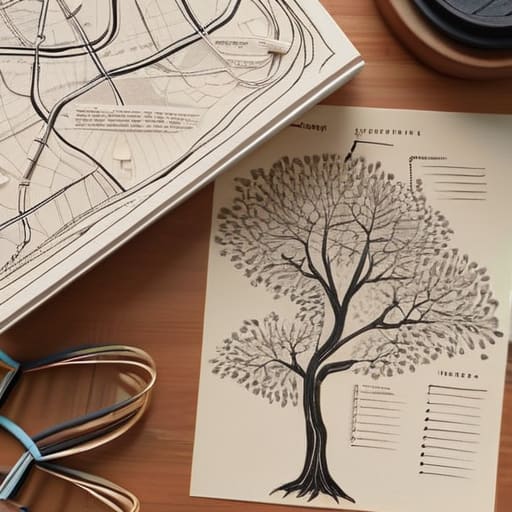
At the end of the day, mind mapping isn’t about creating a perfect, aesthetic masterpiece that looks good on a Pinterest board. It’s about taking that overwhelming mental static—the endless to-do lists, the half-baked project ideas, and the general Tuesday chaos—and giving it a place to live outside of your skull. Whether you’re sketching out a new workflow on a piece of scrap paper or using a digital tool to untangle a complex career move, the goal is the same: to stop spinning your wheels and start seeing the connections. By visualizing your thoughts, you’re essentially clearing the clutter out of your mental junk drawer so you can finally see what you’re working with.
Don’t feel like you have to master this perfectly on your first try. Just grab a pen, find a blank page, and let the ideas bleed out until things start to make sense. You don’t need a massive life overhaul to feel like you’re back in the driver’s seat; sometimes, you just need to map out the next small step. Life is always going to get messy, and your brain is always going to feel a little loud sometimes, but you now have a way to navigate through it. Take it one branch at a time.