Staying Productive and Balanced While Working Remotely
I’m so sick of seeing those polished, aesthetic “desk setup” videos that claim you need a $500 ergonomic chair and a three-monitor array to actually be productive. Honestly, most of those influencers are selling a dream that doesn’t survive a real Tuesday. I spent my first six months as a freelancer thinking I needed a high-tech command center, but all I ended up with was a cluttered desk and a massive sense of burnout. The truth is, most remote work tips you find online are just expensive distractions wrapped in pretty lighting. You don’t need a complete office overhaul to get your head in the game; you just need to stop fighting your environment and start working with it.
I’m not here to sell you on a lifestyle overhaul or a productivity app that requires a monthly subscription. Instead, I want to share the small, gritty adjustments I’ve made to keep my sanity while navigating the chaos of freelance life. We’re going to focus on low-effort, high-impact habits—the kind of stuff that actually works when your Wi-Fi is acting up or your laundry is staring you down. Let’s skip the hype and get into what actually helps you stay sane while working from your living room.
Small Remote Work Productivity Hacks That Actually Stick

First off, let’s ditch the idea that you need a high-tech, multi-monitor command center to be effective. I used to think my home office setup ideas had to look like a Silicon Valley startup, but honestly, that just added more clutter to my brain. Instead, I started focusing on “micro-environments.” If I’m doing deep work, I put on my noise-canceling headphones and clear everything off my desk except my keyboard and a notebook. If I’m just answering emails, I move to the kitchen table. This simple mental shift helps signal to my brain that the “work mode” has officially clicked in, without needing a dedicated room or a massive budget.
Another thing that saved me from total burnout was the “one-task reset.” When the Slack notifications start feeling like a personal attack and my focus is shot, I don’t try to power through. That’s how you end up staring at a cursor for twenty minutes. Instead, I use a tiny ritual: I step away from the screen, grab a glass of water, and write down one single thing I need to finish next in my physical notebook. It’s a low-tech way of practicing remote work burnout prevention that actually works. It stops the spiral and turns a chaotic afternoon back into something manageable.
Simple Home Office Setup Ideas for Real People

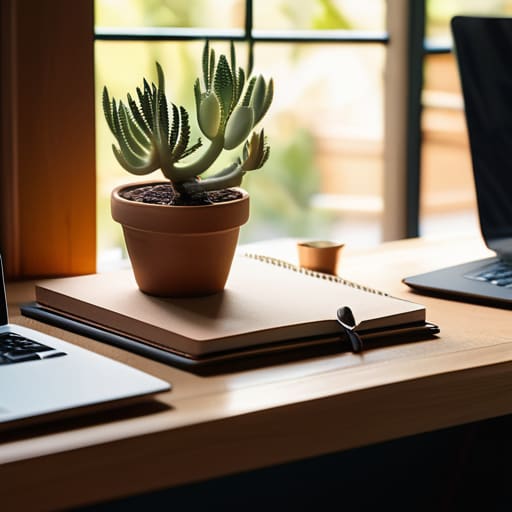
Look, I’m not going to tell you that you need a $3,000 ergonomic throne and a dedicated studio to get things done. Most of my best work happens at a slightly beat-up wooden desk in the corner of my living room. The secret isn’t about the gear; it’s about reducing friction. I spent way too long trying to make my space look like a Pinterest board before I realized that if my charger cable is tangled or my notebook is buried under mail, I’m just going to procrastinate. Focus on a “landing pad” for your essentials—a dedicated spot for your laptop, your water bottle, and that one physical notebook that keeps me sane.
When it comes to actual home office setup ideas, I’m a huge advocate for sensory boundaries. Since I don’t have a commute to signal the start of my day, I use lighting to trick my brain. I keep things bright and cool during my deep-work blocks, but once I wrap up, I switch to a warm lamp. It’s a tiny, low-cost way to help with remote work burnout prevention because it physically signals to your brain that the “office” is closed. You don’t need a renovation; you just need a way to tell your mind when it’s time to grind and when it’s time to breathe.
Five low-effort ways to stop the workday from bleeding into your life
- Stop working from your bed. I know, it’s tempting when the commute is literally three feet, but your brain needs a physical boundary between “sleep mode” and “work mode.” Even if it’s just moving to a specific chair at the kitchen table, give your brain a signal that the shift has started.
- Use a “brain dump” list for the mid-afternoon chaos. When I’m deep in a project and a random thought hits—like needing to buy milk or a weird email I forgot to send—I don’t switch tasks. I just scribble it in my notebook and keep moving. It keeps the mental clutter from hijacking my focus.
- Set a hard “digital sunset.” Pick a time—say, 6:00 PM—where the laptop lid goes down and the Slack notifications stay off. Remote work makes it way too easy to “just check one more thing” at 9:00 PM, but that’s how you end up burnt out by Wednesday.
- Embrace the “micro-break” instead of the marathon. Instead of trying to power through four hours of straight focus, try the 50/10 rule. Work for fifty minutes, then actually get up and walk away from the screen for ten. Stretch, grab water, or just stare at a wall. It sounds counterintuitive, but it keeps your brain from turning to mush.
- Curate your sensory environment. Since you don’t have the natural rhythm of an office, you have to build your own. Whether it’s a specific lo-fi playlist or a certain scent, use these small sensory cues to tell your subconscious, “Hey, we’re in deep-work mode now.”
The TL;DR for your messy workdays
Stop chasing the “perfect” routine; instead, pick one tiny, low-effort habit—like clearing your desk or opening a window—to anchor your day.
Your workspace doesn’t need a massive budget overhaul, just a few functional tweaks that make your immediate environment feel less chaotic.
Focus on managing your energy, not just your clock, by breaking big projects into small, repeatable tasks that don’t feel overwhelming.
Finding Your Rhythm
Look, we’ve covered a lot of ground here—from those tiny productivity tweaks that keep your brain from melting to making your actual physical space feel less like a bedroom and more like a workspace. The main thing I want you to take away is that you don’t need a $2,000 ergonomic chair or a complex time-blocking system to be “successful” at working from home. It’s really just about lowering the barrier to entry for your most important tasks and making sure your environment isn’t working against you. Whether it’s clearing your desk before you sign off or finally finding a decent lamp for your corner, these small adjustments are what actually make the difference when the mid-week slump hits.
At the end of the day, don’t let the pursuit of the “perfect” routine become another item on your overwhelming to-do list. Some days are going to be productive, and some days you’re probably just going to be staring at a spreadsheet while wondering what to make for lunch. That’s okay. Remote work is a skill, and like anything else, you’re going to have some messy days. Just focus on finding your own rhythm and being kind to yourself when things don’t go according to plan. You don’t need to conquer the world every single morning; you just need to handle your Tuesday one small habit at a time.